Saturday, June 7, 2014

The Battle of New Orleans


The Battle of New Orleans was the final battle of the War of 1812. It occurred on January 8, 1815. The leader of the U.S. forces was Andrew Jackson. The British were led by Edward Pakenham. The battle happened after the Treaty of Ghent had been signed. The treaty was supposed to have ended the war, but that was not the case. The war would continue until around mid-Feburary. The Battle of New Orleans was part of the Louisiana Campaign. This battle, unlike the Civil War battles was fought primarily on the water. The plan was to have a two pronged assault on Jackson's position. Colonel William Thornton was ordered to go up river and attack the batteries that were commanded by Commodore Daniel Patterson. They thought if Patterson's line was open, then the British forces could get to Jackson. This plan looked good on paper, but it did not work out the way that the British had hoped. On the morning of January 8th, fog filled the air. The fog made it difficult for Thornton to navigate his way up the river to attack Patterson. This delay allowed Jackson to attack and defeat the British Highlanders. By the time Thornton had reached Patterson, the ships were already retreating. The next day the British captured Fort St. Philip. They eventually withdrew their forces on January 18th. The U.S. forces had won. This was considered an upset to many, since the U.S. had been  outnumbered by the British. This victory also allowed the U.S. to protect the land that they had acquired in the Louisiana Purchase. The Battle of New Orleans made Andrew Jackson a hero.

Above is a picture of Andrew Jackson commanding his men as they fight the Highlanders.

Above is Andrew Jackson commanding his men at the Battle of New Orleans.

Above is a picture of Andrew Jackson
Above is a picture of Edward Pakenham

Stay tuned for more blog posts about tales from Tennessee and beyond.

Friday, May 30, 2014

Book on the War of 1812


Yesterday I did my first in a series of blog posts on the War of 1812. I got to thinking that some of my readers might be interested in this work by Donald R. Hickey. The book is entitled The War of 1812: A Forgotten Conflict. Hickey does a really good job outlining the events of the War of 1812. He includes maps of key battles and pictures of key people. I will warn you though, this book is almost like a textbook/reference book. It is perfect however for doing research. I highly recommend anyone who is interested in the War of 1812 to get a copy of this book. It is sold at most bookstores and on Amazon.com. This book like the ones that dealt with the guerrilla war are a must have for any history enthusiast's library.

Stay tuned for more blog posts about tales from Tennessee and beyond.

Thursday, May 29, 2014

The Creek War


The Creek War was a major engagement that occurred within the War of 1812. The war involved the Creek Indians and the U.S. army. Most of the battles took place in the deep south. The leaders of this war were William Weatherford and Andrew Jackson. Weatherford was a key chief in the Creek Nation. Jackson was a Tennessee country boy who had been given command of the Tennessee Militia by Governor William Blount. There were militias from other states as well that fought the Creeks. Jackson and his Tennessee Militia took the lead in this battle however. Jackson's goal was to burn down Creek villages and build roads into the heart of the south. Jackson began his march at Fayetteville, Tennessee. Two of the major skirmishes that Jackson was involved in were at Tallushatee and Talladega. He and his men set up their headquarters at Fort Strother. Jackson eventually marched back up into Tennessee, stopping at Chattanooga and Knoxville along the way. The Creek Indians chose to set up their base along the Chattahoochee River in Georgia. The Creeks were aided by the Shawnee Indians, led by Tecumseh. In the end Andrew Jackson forced the Creeks to sign the Treaty of Fort Jackson. This treaty gave the United States all the land that the Creek Indians owned. The treaty all but set the wheels in motion for Indian Removal. The Creek War made Jackson a U.S. hero. He was now one of the leading generals in the War of 1812. Just a short time later Jackson would defeat the British at the Battle of New Orleans, and would eventually become president of the United States.

Above is a map of the land that was given to the U.S. government by the Creek Indians. Most of the fighting took place in this area.

Above is a picture of Andrew Jackson

Above is a picture of Tecumseh

Above is a picture of William Weatherford


Stay tuned for more blog posts about tales from Tennessee and beyond.

Monday, May 26, 2014

Remembering those who served in the Civil War and War of 1812


On this Memorial Day lets take the opportunity to remember the men who served this country in the Civil War and the War of 1812. These wars are often overlooked by our society today. I hope that the pictures below will take you back to the 19th century during the time of these wars.


I personally have ties to the War of 1812. My relatives, Dennis McCawley and Cornelius Carver both served in the "Forgotten Conflict." Future blog posts will deal with the War of 1812.


I also have personal ties to the Civil War. My relative Samuel Carver was a prisoner of war that served with the Union forces. Upon his release he was granted a Union pension that lasted him all the way up until his death. He used the pension to buy land in Granville, Tennessee where he started a farm, which my grandparents live on to this day.

Stay tuned for more blog posts about tales from Tennessee and beyond.

Thursday, May 22, 2014

The Battle of Chattanooga


There were a series of three battles at Chattanooga, Tennessee. The battles were part of the Chattanooga campaign, that lasted from October to November 1863. The commanding generals for each army were Ulysses S. Grant for the Union and Braxton Bragg for the Confederacy. These battles proved to be a gateway for the Union to reach the heart of the Confederacy. Grant was able to reach Chattanooga by breaking the Confederate supply line, known as the "Cracker Line." Bragg reached Chattanooga thanks to his defeat and forced retreat at Stones River. Chattanooga was important to both sides because whoever controlled the city controlled the railroad. The railroad was a link to towns (like Nashville or Atlanta) throughout the Confederacy. When Bragg got to Chattanooga he set up his camp on top of Lookout Mountain. He felt that this was a good position because he could see the entire city and also had access to natural resources such as water. The first major skirmish at Chattanooga was at Orchard Knob. Orchard Knob was a defeat for the Confederacy. The Union set up their headquarters for the rest of the battle at Orchard Knob. Meanwhile William Tecumseh Sherman was trying to cross the Tennessee River, but the pontoon boat that was going to transport them had been destroyed, stranding he and his men in the Lookout Valley. The next skirmish occurred at Lookout Mountain. As was mentioned earlier Braxton Bragg had set up his headquarters on Lookout Mountain. Grant and the Union army felt that if they attacked Lookout Mountain then they could surround Bragg and force him to either retreat or surrender. The first fighting was instigated by Joe Hooker. Hooker was also known as Fight'n Joe. He was known to not listen to others, instead choosing to do his own thing. Lookout Mountain was no different. Hooker ignored Grant's orders and attacked the Confederate forces. Hooker was successful however as he forced part of the Confederate army to retreat. The Battle of Lookout Mountain became known as the "Battle Above the Clouds." The Confederate army was struggling to hold their position. Things would not get any easier for the Confederates at Missionary Ridge. Fight'n Joe Hooker and William T. Sherman were ordered to launch an all out assault on Missionary Ridge. The goal, like at Lookout Mountain, was to force the Confederates to retreat or surrender. Missionary Ridge was another defeat for the Confederate forces. Bragg and his men were forced to retreat to South Chickamauga Creek. Braxton Bragg resigned from the Confederate army just a few months later due to his losses at Chattanooga and at Stones River. The Battle of Chattanooga marked the starting point for Sherman's March to the Sea. Grant was able to prove to Abraham Lincoln that he was indeed the right man to lead the United States Army. The Union now controlled not only Chattanooga but the railroad as well. The Confederacy was up for grabs.

Above is Gen. Ulysses S. Grant

Above is Gen. Braxton Bragg

Above is Gen. William Tecumseh Sherman

Above is Gen. James Longstreet

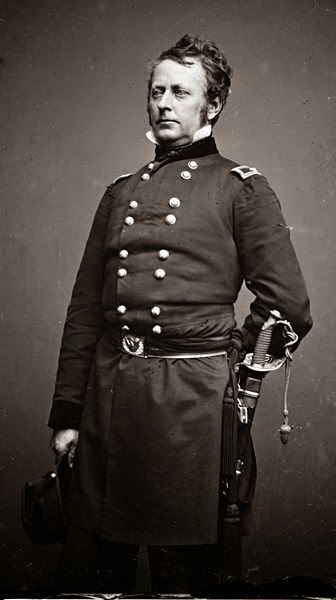
Above is Gen. Joseph "Fight'n Joe" Hooker

Above is the battlefield as it appears today.

Here is the link to the Civil War Trust page about the Battle of Chattanooga: http://www.civilwar.org/battlefields/chattanooga.html

Stay tuned for more blog posts about tales from Tennessee and beyond. 


Monday, May 19, 2014

Dr. Jonathan Hale


Dr. Jonathan Hale was a prominent resident of Pickett County Tennessee. Hale was a very wealthy and well educated man. He was involved in many business ventures. He along with his friend David Beaty (Tinker Dave, pictured above on the right), and John Jouett owned and operated a grist mill in Pickett County that was known as Huddleston's Place. Hale also served as postmaster in Pickett County. Hale was considered to have been the anti-Champ Ferguson. Hale wrote many pamphlets detailing the activities that Ferguson had been involved in. Hale and his family fell victim to Ferguson and his gang many times. The first incident occurred while Hale was away on business. Champ and his men rode into the Hale farm knocking down the fence. Hale's wife Pheroba was at home at the time. Ferguson and his men took horses, gunpowder, and money, and then left. This led Hale and Tinker Dave to form a band of "home guards" in order to protect their family and property from Champ Ferguson and his gang. Ferguson managed to slip past the home guard however and make another raid on the Hale farm. This time Ferguson and his men were able to steal the Hale family's piano. Ferguson took the piano and attempted to sell it at a general store in the White County community of Yankeetown. After the war Hale and his wife had the pleasure of testifying against Ferguson at his trial. Hale and Beaty went on to become prominent members of their communities. Together the two men were able to bring down Champ Ferguson.

Not much is known about Jonathan Hale. For more information I suggest that you check out any of the books written about Champ Ferguson.

Stay tuned for more blog posts about tales from Tennessee and beyond.

Monday, May 12, 2014

The Cheyenne River Sioux


Below is an amicus curiae (friend of the court) brief that I wrote for my American Indian law class this past semester.


     The Cheyenne River Sioux tribe is located in Eagle Butte, South Dakota. The tribe is of the Lakota division of the Sioux Nation. The tribe is divided up into six districts. The tribal council consists of a tribal chairman, a vice-chairman, two tribal secretaries, and two tribal treasurers. This tribe is no stranger to the courts. There have been many court cases and treaties that have involved the Cheyenne River Sioux tribe. This amicus brief will look at the political history of the Cheyenne River Sioux, as well as past court cases and treaties that have shaped their current government.
The Cheyenne River Sioux tribe today occupies around 1.4 million acres of land. The tribe is made up of around 8,000 members. There are four bands that make up the tribe. They are the Minnecoujou, Two Kettle, Sans Arc, and Blackfoot. Most members of the tribe speak the Lakota language. The government of the tribe was approved on December 17, 1935. In terms of elections the tribal executives are elected to four year terms. The tribal representatives are elected to four year terms, but elections are staggered and sometimes are instituted every two years instead of four. The first leader of the tribe was Big Foot who was killed during the 1890
page1image12728
page1image13000
Wounded Knee Massacre. During the Civil War the Cheyenne River Sioux tribe as well as other tribes from the Sioux Nation engaged in a rebellion that involved guerrilla warfare. The rebellion was eventually put down by Eugene Marshall. The current leader of the tribe is Arvol Looking Horse. He has led many efforts to prevent the sale of sacred pipestone. He has an honorary doctoral degree from the University of South Dakota.
As was mentioned above, the Cheyenne River Sioux tribe is divided up into six districts. They have a tribal council much like other tribes do. The tribe traces their beginnings through a Lakota creation story. They relied on the buffalo for food and to make things essential for their everyday life. The Cheyenne River Sioux were at the Battle of Little Bighorn and the Wounded Knee Massacre. They also have fought for their religious freedom throughout the years. The Cheyenne River Sioux, like other tribes have been fighting for rights for a long period of time.
Today the Cheyenne River Sioux tribe is thriving. The tribe has set up departments for tourism, employment, veteran services, and the list goes on. It seems that tourism is their biggest industry today. They have a tribal store, which consists of museums, a gift shop, and a convention center. The tribe also has many schools. These schools range from elementary to secondary. There is also a community college center. There is also  Presentation College within the tribe. The tribe also includes a head start program which serves many communities within the tribe.
The tribe also is home to business such as feed stores, and crop spraying services. The tribe is also home to a hospital, and banks. There is also law firms located within the tribe. Many of
page2image17104
page2image17376
these businesses are members of the chamber of commerce. The chamber of commerce’s goal is to promote a vibrant regional economy. The tribe is also home to two hotels. These hotels are in place to promote tourism. It is also worth noting that both of these hotels are locally owned and operated.
The Cheyenne River Sioux tribe has been affected by treaties and laws over the years. The treaties that have affected this tribe include the Fort Laramie Treaty, The Treaty of Fort Laramie that was passed in 1851, and The Treaty of Fort Laramie that was passed in 1868. The laws that have affected this tribe include the Regulation of Sacred Objects across Canadian Border Act, the Indian Gaming Regulatory Act, the Native American Rights Fund, and the Indian Child Welfare Act. This tribe is currently being affected by the Salazar Per Capita, which would affect the distribution of around 19,000 per capita checks.  Each of these treaties and laws has had an impact on this tribe in either a positive or negative way.
The Cheyenne River Sioux tribe has two ordinances in place in order to preserve their heritage. The ordinance numbers are 57 and 66. Ordinance 66 says that the Cheyenne River Sioux tribe has the right to teach the Lakota language in their schools. Ordinance 57 says that the cultural resources of the tribe will be protected. The tribe’s natural resources are protected by the National Historic Preservation Act, the Archeological Resources Protection Act, and the Native American Graves Protection and Reparation Act. The tribe is currently in the midst of passing
page3image15944
page3image16216
page3image16488
page3image16760
page3image17032
the JTAC ordinance which effects economic development, infrastructure development, and education, health, recreation, and social the social welfare fund.
The Cheyenne River Sioux tribe has also been involved in some past court cases as well as treaties. The next sections of the amicus brief will look at and analyze a few of these documents. These treaties and court cases have had a lasting impact on the tribe as it is known today. This will also be included in the analysis of each document.
The first case that will be examined is the 2012 case Cheyenne River Sioux Tribe v. Judicial Court this case was a custody dispute. The Cheyenne River Sioux tribe was in possession of three Native American children. The children had been hospitalized; the oldest child was intoxicated and suffering from seizures. The court said that the tribe was in violation of the Indian Child Welfare Act. The tribe argued the custody that the oldest child was placed in. The court said that placement practices were not applicable. The tribe filed for a writ of mandamus. The writ of mandamus prohibited the court to start a new custody hearing. The court rejected the tribe’s request for a new custody hearing, saying that they had filed a writ of mandamus unlawfully. The children were placed in the custody of their mother.9
The next case that will be discussed is the 1963 case Employment SEC. Dept. v. Cheyenne River Sioux Tribe this case was a dispute over an effort to collect contributions to the state unemployment trust fund. The tribe had been employed by an unnamed company. They had stopped working for them. The tribe had collected taxable wages from the company. The problem was that the tribe had to pay the Federal Government 90% of their wages under the
page4image16392
page4image16664
page4image16936
Federal Tax Act. Another catch was that Indian tribes could not be sued without the permission of Congress. The court was found to have no jurisdiction of the tribe in this civil case. The case was dismissed.
In the case of Red Bear v. Cheyenne River Sioux Tribe (1983), Red Bear, a tribal police officer, had injured his hand while on the job. The injury resulted in nerve damage in Red Bear’s hand. The plaintiff claimed that he needed surgery, but did not have enough money to do so. As a result of this11 the operation was postponed and it prevented the plaintiff from effectively doing his job. Red Bear said that he was not able to hold his pistol properly. As a result the plaintiff had to resign from the police force. Red Bear took the tribe to court with hopes of getting unemployment benefits. He felt that the tribe had not properly helped him obtain the surgery that he needed. The court determined that the plaintiff did not need unemployment benefits from the tribe. The court said that if they had of ruled in favor of Red Bear, the eligibility requirements for unemployment would become restricted.
In the case of Cheyenne River Sioux Tribe and Oglala Sioux Tribe v. United States Appellee (1986) the tribes and the Federal Government engaged in a land dispute. Land had been originally reserved for the Sioux tribes under an 1868 treaty. The Federal Government was now trying to claim that land as theirs. The Federal Government had acquired this land in an 1877 treaty. The hunting and fishing rights were not included in the 1877 treaty. The tribes eventually
page5image15072
page5image15344
page5image15616
settled, but only two of the four tribes accepted it. The Supreme Court eventually vacated judgment of this case.
There have also been multiple treaties that have affected the Cheyenne River Sioux tribe throughout the past few years. The earliest treaty that affected the tribe was the first Fort Laramie Treaty. As was mentioned above these treaties all affect this tribe in a variety of ways. Some of these treaties have been the deciding factor as to whether a court case is one or lost. The following part of this amicus brief will analyze a few of these treaties and look at the impact that they have had on the Cheyenne River Sioux tribe.
The first treaty that will be examined is Public Law 88-418. This treaty was created in order to resolve a land dispute which involved the Cheyenne River Sioux tribe. This treaty was passed on August 11, 1964. The treaty says that all land that the tribe sells, the money that is paid for the property has to go to the Department of the Interior. The treaty also says that any land that is purchased with the money that goes to the Department of the Interior, is owned by the Federal government, but is put under the trust of the tribe. If this land is sold the tribe must immediately inform the Department of the Interior.
The next treaty involves mineral rights on the Cheyenne River Sioux reservation. This treaty was passed on July 14, 1954. This treaty says that both the Cheyenne River Sioux tribe as well as the Standing Rock Sioux tribe has full access to their mineral and timber rights. The tribes are required to pay the holders all of the moneys that were collected in exchange for the use of the mineral and/or timber rights on the land. This treaty does come with a catch however. The
page6image16952
page6image17224
page6image17496
Secretary of the Interior has the authority to regulate anything that is essential to carry out this act.
The next treaty involves a land dispute between the tribe and the Federal government. There had been 160 acres of land that had been set aside for use by the St. John’s Mission School. This land had been set aside by the president in 1890 for use by the school. In 1903 the school reached out to the Federal government to say that they no longer wanted the land. As a result of this President Theodore Roosevelt said that any land that was not being used must be disposed of. 
Another treaty that will be analyzed was put into effect on April 29, 1930. It involved a member of the tribe that had been killed during the First World War. The question was whether or not the tribe was obligated to build a memorial in his honor. This treaty made it necessary for the Cheyenne River Sioux tribe to erect monuments on behalf of members of the tribe who have died in the line of duty. The Secretary of the Interior must approve these monuments however. The memorials also had to be paid for by using the United States Treasury. These memorials could not cost any more than $1,500 dollars.
The next treaty involves multiple tribes within the Sioux Nation. It involved living and working conditions that the Sioux Indians were exposed to. This treaty went into effect on August 7, 1882. The first article of this treaty says that the Cheyenne River Sioux Indians should have the same living conditions that the white man has. These living condition requirements should be regulated and monitored by the United States government. The second article essentially refers to treaties that were passed in 1868 and in 1876. This treaty says that these
page7image16832
page7image17104
page7image17376
Sioux Indians are required to live on their own assigned reservations. The third article says that the leader of every family is entitled to 320 hundred acres of land. This land was given to the Indians by the United States government.
This treaty also said that the Indians were to be given multiple head of cattle and bulls. The United States government was also required to provide the Indians with services such as doctors, carpenter, and millers. The Federal government was also to provide the Indians with lodging. The Indians had to all be in good standing with both the United States government as well as their tribal government.
This new treaty also modified old ones. According to article eight of this new treaty, the treaties of 1868 and 1876 have been modified. This treaty also said that the Federal government would regulate and oversee the tribal schools. The Sioux tribes that were affected by this treaty were the Pine Ridge tribe, the Rosebud tribe, the Standing Rock tribe, the Cheyenne River, and the Lower Brules. This treaty was signed and stamped by each member of these tribe’s tribal councils. This treaty was most definitely a huge benefit to these five Sioux tribes. 
As one can see the Cheyenne River Sioux tribe has been involved in their share of legal trouble. As a historian I have to say that I side with this tribe in all of these court cases that have been mentioned above. These people however deserve to be treated the same as any other group does. This tribe has made significant contributions in the United States today. They are home to a college, and they also help to boost the economy in South Dakota by way of tourism. These people should be left alone by the United States government. The only instance in which the Federal government should step in and get involved with an Indian tribe is if there has been a
page8image17080
page8image17352
major crime that has been committed in Indian Territory. The United States government needs to back off and let the Cheyenne River Sioux tribe “stand own their own two feet.” This tribe does not want the Federal government hanging around telling them what to do. We as non-Indians need to stop thinking that we can take advantage of the Indians. They have been taken advantage of enough already throughout their history. Does not everyone deserve respect and equal treatment? I think so.
All of the court cases and treaties that have been analyzed above have had both positive and negative effects on the Cheyenne River Sioux tribe. This tribe is no different from other ones in the sense that the majority of the conflict that they have been in involved has involved land disputes.
One question that arises that peaks my interest is the fact that why do these Indians have to pay the Department of the Interior “x” amount of money every time they sell a piece of property? On the flip side, why do the Indians have to pay the Department of the Interior “x” amount of money every time they purchase a piece of property? It just does not make sense. These Indians deserve to be treated better.
Another question that arises out of this is why do the members of the Cheyenne River Sioux tribe have to get their plans for a monument to war veterans approved by the Department of the Interior? It seems to me as a historian that the Indians should be able to control their own finances. This is like a mother telling her child to save their money for things more useful. This is essentially how the Indians are being treated and they are adults. The current leader of the Cheyenne River Sioux tribe holds an honorary doctorate from South Dakota State University.
That alone should tell the court that these people are extremely educated and should not be treated like babies.
The Cheyenne River Sioux tribe has also done much good work for the economy of South Dakota besides just tourism. The tribe is home to many business, as well as schools. The college that was mentioned above is a very well-respected institution of higher learning. Presentation College has many programs of study that equips students to be productive members of society. The college also offers many campus life programs in order to bring students together. These campus life programs are beneficial to the students in the sense that they keep young people off the streets and thus out of trouble. Presentation College is not entirely made up of Indians. There are many non-Indians that attend school at Presentation. This allows these non-Indian students to gain a broader understanding and appreciation of what it is like to be a member of the Cheyenne River Sioux tribe and live on the reservation.
The Cheyenne River Sioux tribe deserves much recognition for the things that they have done over the years. The efforts by the tribal government to stop the sale of sacred pipestone are to be commended. The efforts of this tribe to promote education at the elementary, middle, high school, and college level are also to be commended. This tribe realizes that education is of the utmost importance. The tribal leaders know that without a strong education system the leaders of tomorrow will not be properly equipped to lead the tribe in the future.
The Cheyenne River Sioux has seen their share of controversy, but they seem to always come out on top. From a historians perspective the tribe does things the right way. During my research there was not one case that involved corruption within the tribal government. I commend this
tribe for that, and think that they deserve recognition for their outstanding honesty and integrity in the way that they conduct their business.
Finally I ask the court to reach out and help this tribe both financially and legally. This tribe deserves that. One thing that this court does not need to do is give them a hard time. This tribe has had too much of that. This tribe also deserves the right to not have to answer to the Department of the Interior for everything they do. This tribe has earned the right to be independent from the United States government. In the end honesty and integrity prevail, and this tribe most defiantly has that. 


Above is a map of the Cheyenne River Sioux reservation. The six districts are outlined.


For more information about the Cheyenne River Sioux tribe I suggest that you check out their website: http://www.sioux.org

I apologize if this post is formatted weird, I copied and pasted my paper from a Word document into the blog template and removed the footnotes. Check out Justia.com and The Oklahoma State Online Library's Kappler for more information about these court cases and treaties.

Stay tuned for more blog posts about tales from Tennessee and beyond.