Friday, August 8, 2014

Railroads in the Civil War


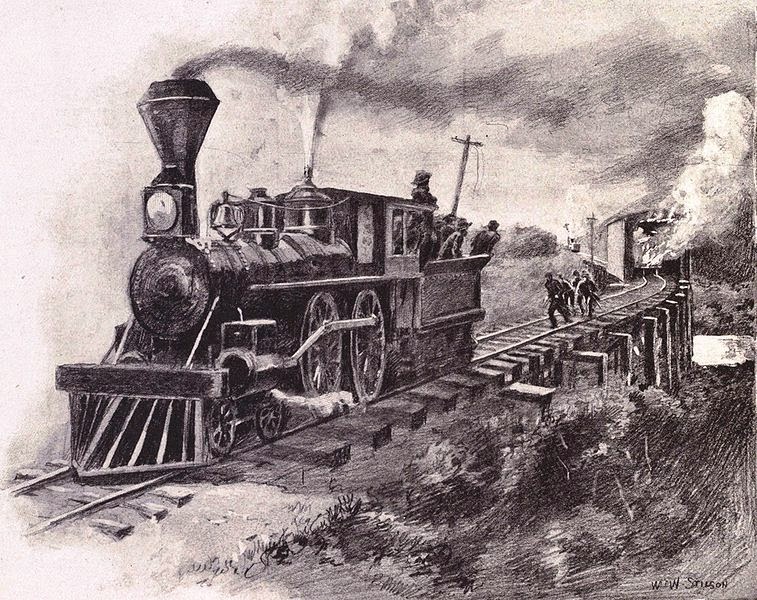
During the Civil War, railroads played a vital role in the fighting. Trains were used to move troops and supplies from battle to battle, and most battles took place near railroads. At the time of the Civil War, the railroad was a fairly new invention. The rate of accidents was high, due to the lack of knowledge that the engineers had. Railroads proved vulnerable during the war. Many armies thought that if they could destroy the railroad, they could prevent the opposing army from moving. This tactic was used by both sides. Guerrillas, such as Champ Ferguson led raids on the railroads. They ripped up the tracks so that the train would either wreck or not be able to get through. John Hunt Morgan and John Singleton Mosby chased down trains on their horses and robbed them at gunpoint. Trains carrying soldiers were especially vulnerable to this type of assault. The Confederacy's main rail line ran from Nashville to Atlanta. The Union's main rail line ran from Baltimore to Ohio. Once Nashville fell to the Union, the railroad had been conquered also. The Union army was able to send troops and supplies down into the heart of the Confederacy. John Singleton Mosby made many raids on the Baltimore and Ohio Railroad, but was never able to fully conquer it. Many historians believe that one reason the Union army won the Civil War, was that they were able to control the railroad. The railroad did indeed play a vital part in the Civil War.

Above is a map of the many railroads in the U.S. during the Civil War.

The Nashville Railroad was one of the main railroads that both sides used during the Civil war. The railroad actually runs right by the Stones River Battlefield.

For more information about railroads in the Civil War I suggest that you check out the article on the Civil War Trust website as well as the article on the Civil War Times website about railroads in the Civil War.

Civil War Trust: http://www.civilwar.org/education/history/warfare-and-logistics/logistics/railroads.html
Civil War Times: http://www.civilwar.com/weapons/railroads.html

Stay tuned for more blog posts about tales from Tennessee and beyond.

Thursday, August 7, 2014

Custer's Last Stand


Custer's Last Stand was the final skirmish in the Battle of the Little Bighorn. The battle was fought between the U.S. and the Lakota Indians. The leader of the U.S. forces was General George Armstrong Custer. The leader of the Lakota Indian tribe was Crazy Horse. The battle was fought over land rights. The U.S. settlers felt that the Lakota Indians were a threat to their way of life, they were also scared of them. The Lakota Indians felt the same way. They also wanted to defend their land from take over by the settlers. The battle took place in Montana, near the Little Bighorn River. The U.S. had an advantage in the battle, because they were led by Custer. Custer had fought with the Union army in the Civil War, and had been successful in other skirmishes with the Indians. The only problem facing Custer was that he was very cocky. He did not think that he could be defeated in battle. Crazy Horse and the Lakota Indians would change that. The entire Battle of the Little Bighorn was an embarrassment for the U.S. Custer was outmatched by the Lakotas. The Lakota Indians unlike the U.S. forces could call for reinforcements. The Arapaho Indians assisted the Lakotas during the battle. Near the end of the battle Custer had lost almost all of his men. What survivors he had were wounded. It was all they could do to make their way up onto a nearby hilltop. This mountain became known as Last Stand Hill. It was here that Custer thought that he could fight off the Lakotas by himself. Custer managed to last for a long thirty minutes, before he was finally killed. His cockiness had finally caught up to him. The legacy of a good general had been tarnished because of one moment of self pride.

Above is a picture of General George Armstrong Custer

Above is a picture of Crazy Horse.

Stay tuned for more blog posts about tales from Tennessee and beyond.

Monday, August 4, 2014

The Battle of the Alamo


The Battle of the Alamo was fought between February 23 and March 6, 1836. It was one of the most decisive battles fought during the Texas Revolution. The Battle of the Alamo can also be referred to as the Battle of San Jacinto. Americans call it the former, and the Mexicans call it the latter. The battle began as part of a 13 day siege at the mission in San Antonio, Texas. The siege was controlled by Mexican General Antonio Lopez de Santa Anna. This siege caught the attention of the United States government. Sam Houston (from Tennessee) decided to send some men down to the Texas territory to put down this rebellion. These men were led by James Bowie. Houston told Bowie to destroy the Alamo when he got there. He could not however, because the Mexicans had laid siege to it. Bowie called for reinforcements, so Houston sent William B. Travis and Davy Crockett. The plan for both sides was to launch an all out assault on the Alamo. The Mexican army was the first to lay siege to the Alamo. Santa Anna stationed his troops around the outer perimeter of the Alamo. Travis knew he needed reinforcements, so he broke up his army into different regiments. One regiment was driven back to the prairie by the Mexicans, but on March 4th one regiment (led by Davy Crockett) was able to penetrate the Alamo. Both sides now realized that a battle was eminent. Fighting began on the morning of March 5th. Fighting occurred both inside and outside the Alamo. The Mexicans were the first to attack. They killed the American guards in their sleep, and ran into the Alamo yelling "Viva Santa Anna." The Americans were at a disadvantage because they were essentially cornered, with no where to go. Many soldiers, including William Travis, died while leaning over the Alamo wall trying to get an accurate shot directed toward the Mexicans. The Mexicans attacked a total of three times on the first day of fighting. The second and final day of fighting took place primarily inside the Alamo. Like the first day, the U.S. troops were cornered. Many retreated to the barracks and chapel, and fired through holes in the walls. Others escaped over the wall, and headed for the prairie. All of these men were most likely killed, or captured and then killed. The last U.S. regiment that was left standing was led by Davy Crockett. As was mentioned above Travis had been killed, and Bowie had died while lying sick in bed, he saw no action during the battle. Crockett however decided to take control of the battle as best he could. He and his group of men had run out of ammunition sometime during the battle, and were forced to use their guns as clubs. The Mexicans however were able to drive Crockett and his men back into the Alamo, where they most likely were killed. The Mexicans then raised their nation's flag signaling victory. The Mexican army had killed every U.S. soldier. The Battle of the Alamo was a complete catastrophe for the United States.

Above is a picture of Sam Houston.

Above is a picture of William B. Travis.

Above is a picture of Jim Bowie.

Above is a picture of Davy Crockett.

Above is a picture of Mexican General Santa Anna.

The Battle of the Alamo was made into a movie in 1960. Starring John Wayne as Davy Crockett, the movie does a good job of depicting the events leading up to the battle, as well as the battle itself.

Above is the Alamo as it looks today.

Stay tuned for more blog posts about tales from Tennessee and beyond.

Thursday, July 31, 2014

The Boer War


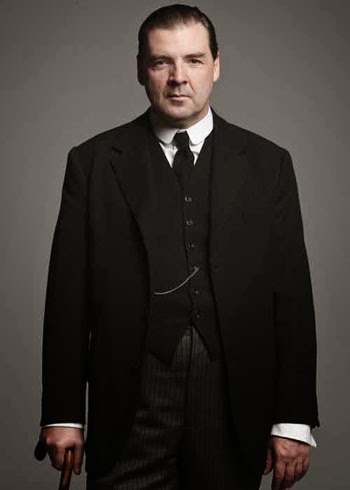
The Boer War was a conflict between the British and the settlers who had gone to Africa to start colonies. There were two republics that made up the Boer nation. They were the Orange Free State and the Transvaal Republic. The Boer War was fought in two parts. The first part dealt with sovereignty. The African settlers wanted to protect themselves from British Invasion. The British were defeated in this first conflict. The second part of the war was very long. The use of guerrilla warfare and concentration camps was common during this conflict. The most famous raid was the Jameson Raid. It occurred before the conflict ever began. The goal was to start an uprising among British workers. This raid however was unsuccessful. Many historians believe this is what provoked the British to fight. The war probably could have ended after the sovereignty dispute, but this was not the case however. The Boers that fought were Christian. They had come to Africa to spread Christianity. Many of these people did not like the idea of fighting against fellow Christians. The British had the upper hand in this skirmish. They were led by Robert Baden-Powell. The goal of the British was simply to stop the Boer offensive, led by Paul Kruger. They were successful, and so began their offensive assault. After a few years of fighting both sides realized that they were getting no where. They decided to practice guerrilla warfare, with an emphasis on a scorched earth policy. The idea was to destroy everything in their path. Unlike in the Civil War, the British and the Boers were not targeting individual people, they were targeting everything. The scorched earth policy also led to the rise of concentration camps. Individuals who were captured were taken to these camps and tortured until they died, or were close to death. These camps were nothing compared to the ones the Nazi's built during World War II. The Boer war ended in 1902, the result was the creation of South Africa. This war is forever known as the Great War in Britain. The Boer War has also been referenced in pop culture. The most notable reference has been in the PBS drama series Downton Abbey. Lord Robert Grantham (Hugh Bonneville) and his footman John Bates (Brendan Coyle) fought alongside each other during the Boer War. Bates was even wounded. The Boer War is vital to our understanding of world history.

Above is a picture of Paul Kruger leader of the Boers.

Above is a picture of Robert Baden-Powell leader of the British.

Above is a picture of Downton Abbey's Lord Robert Grantham. Notice he is wearing his uniform from the Boer War. Look at the similarities between his uniform, the one in the painting above, and the one Robert Baden-Powell has on.

Above is a picture of Downton Abbey's John Bates.


Stay tuned for more blog posts about tales from Tennessee and beyond.


Saturday, July 26, 2014

Daniel Boone


Daniel Boone was a frontiersmen, soldier, and later a prominent businessman. He and his family were some of Tennessee's first settlers. Throughout his life, Boone led many settlers into the land now known as Tennessee. Boone was born in Pennsylvania to Squire and Sarah Boone. His father worked as a blacksmith in the village, and his mother worked as a seamstress. They were both very devout Quakers. Somewhere down the line the Boone family had a falling out with the Quakers in the village. They decided that it would be best if they moved west to start a new life. The family first moved to North Carolina, but eventually decided to cross the Appalachian Mountains and settle in the Cumberland Gap. Young Daniel's role in all of this was to go out and hunt, in order to provide food for the family. Daniel also served with the British in the French and Indian War. He did not see any action, because he was a wagon driver. Upon returning from the war, Boone met, fell in love with, and eventually married Rebecca Bryan. The Boone's became parents to ten children. Daniel's military career did not stop with the French and Indian war however. He served in the Cherokee Uprising, and later in the American Revolution. Boone became most famous for his work as a guide. He helped to guide many settlers into the Cumberland Gap (what is now Tennessee and Kentucky). Boone also worked as a "long hunter," and as a fur trader. Later in his life, he even worked as a tavern keeper. On September 26, 1820 Daniel Boone passed away from natural causes at his son's house in Missouri. Daniel Boone's legacy continues to live on through books, movies, and by word of mouth. As historians it is important to distinguish the fact from the fiction. The fact is Daniel Boone, like Davy Crockett was not a super hero, he was an average guy trying to do what was right to help his family, friends, and country. Daniel Boone is an American hero.

Above is a painting of Daniel Boone leading a group of settlers into the Cumberland Gap.

Above is a picture of Daniel and Rebecca Boone's grave in Missouri.

Stay tuned for more blog posts about tales from Tennessee and beyond.

Thursday, July 24, 2014

Jeb Stuart


Jeb Stuart, also known as J.E.B. Stuart was a army officer who served in the Civil War. He started out serving with the United States, but switched his allegiance to the Confederacy during the Civil War. Stuart was born on a plantation in Virginia. His ancestors had served in the Revolutionary War. He decided to attended school at Emory and Henry College. He was only fifteen years old when he started college. After graduating from Emory and Henry, Stuart decided to enlist in the U.S. Army. They turned him down, because he was not old enough. He then enrolled at West Point, to further hone his military skills. It was at West Point that he met and befriended Robert E. Lee. His first army action came in the Texas territory. The regiment that he served in was tasked with fighting Indians. Before the Civil War broke out, Stuart was promoted to captain. He resigned from the army when Virginia seceded from the Union. Stuart joined Lee in the Confederate Army. He was given control of a cavalry regiment. This regiment served in the Shenandoah Valley, and also at the First Battle of Bull Run. His early success led to him being promoted to brigadier general. Stuart and his men also fought at the Battle of Williamsburg, and at the Second Battle of Bull Run. In these battles he fought alongside Joseph Johnston. After these early battles, Stuart had become as famous as Stonewall Jackson. Stuart later fought in the Maryland Campaign. He and his men fought at the battles of South Mountain and Antietam. Stuart and his men, including John Singleton Mosby, carried out the Chambersburg Raid. They stole horses from the Union army and their supporters. Stuart, unlike his apprentice John Singleton Mosby, preferred to fight "legitimate battles," instead of going on raids. Throughout the rest of his career, Stuart fought at the battles of Fredericksburg, Chancellorsville, Brandy Station, and Gettysburg. The loss of his good friend Stonewall Jackson at Chancellorsville greatly affected Stuart. Stuart however kept on fighting. After the Confederate defeat at Gettysburg, Stuart embarked on his Overland Campaign. The most notable battle was at Yellow Tavern. It was here that Jeb Stuart met his maker. Stuart was shot in the stomach by Union soldier John Huff, while yelling encouraging words to his troops. Stuart passed away in a local hospital just a few hours later. Many tributes have been made to Stuart. Songs have been written in his honor, and the British Army, in World War II named a tank after him. His close friend, and apprentice John Singleton Mosby spent the rest of his life writing pamphlets, and articles to disprove the many myths, and rumors about Jeb Stuart. Mosby wanted to keep Stuart's legacy alive. Jeb Stuart is an American hero.

Above is a picture of Gen. Robert E. Lee.

Above is a picture of Col. John Singleton Mosby.

Above is a picture of Gen. Stonewall Jackson.

Above is a picture of the grave of Gen. Jeb Stuart.

Above is a picture of the British M3 Stuart Tank used during WWII.

Above is a picture of the monument erected in Stuart's honor in Richmond, Virginia.

Stay tuned for more blog posts about tales from Tennessee and beyond.

Saturday, July 19, 2014

John Singleton Mosby Book


I would like to take the opportunity to tell my readers about a book that I came across a few weeks ago. The book is entitled Gray Ghost: The Life of Colonel John Singleton Mosby by James Ramage. I only started reading the book a few days ago, but it is really good. Ramage goes into great detail about the life of Mosby. He tells of his early run ins with the law, and also about his love of literature. This book is also where I discovered the fact that Mosby looked up to Francis Marion. The book also tells of Mosby's early days in the army, being mentored by Jeb Stuart (the next blog post will deal with Stuart). Ramage, later in the book will go into detail about some of the movies that have been produced based on the life of John Singleton Mosby. The book also contains very rare pictures of Mosby and his family. I highly recommend this book. It should be available at most bookstores, and most likely on Amazon.

Stay tuned for more blog posts about tales from Tennessee and beyond.