Thursday, May 25, 2017

Clover Bottom Mansion


The Clover Bottom Mansion is one of the oldest homes in Tennessee. It was constructed on land along the Stones River, in present day Donelson, Tennessee. The land that the mansion sits on was claimed in 1780 by John Donelson. Donelson was the father of United States First Lady Rachel Jackson. Donelson eventually sold the property to Dr. James Hoggatt. The Hoggatts built the current structure in 1858, as the center piece of their 1,500 acre plantation. The name "Clover Bottom" was given to the plantation due to it being located in the "bottom" land of the Stones River. The mansion was constructed using the ornamental Italianate architectural style. This architectural style is similar to the McGavock family's nearby Two River's Mansion. The Clover Bottom Plantation was home to approximately sixty slaves. One of the slaves, John McCline, was ten or eleven when he joined a group of Federal troops passing by, becoming a teamster for them. During the Civil War, troops from both sides set up camp on the grounds of the mansion. On one occasion, when Nathan Bedford Forrest and his men camped at Clover Bottom, the Hoggatt family threw them a barbecue of ham, and corn bread. In 1886 the Hoggatt family sold the mansion and surrounding grounds to Andrew Price. Price had been a four term Congressman from Louisiana. Price had deep roots in Tennessee, and Clover Bottom was a way for him to reclaim them. He and his wife restored the home, and added multiple outbuildings, in order to house thoroughbred race horses. These horses were entered in races at the nearby race track. The Price family owned the Clover Bottom Mansion until 1918, when it was sold to the Stanford family. The Stanford's owned the home until they sold it to the State of Tennessee in 1948. The State used the  mansion as a State Trooper outpost, and also for the Tennessee School for the Blind. By 1980, the historic home had fallen into a state of neglect. The home sat that way until 1994, when the offices of the Tennessee Historical Commission were relocated there. The THC restored the home and all of its outbuildings. Interpretive material, and walking trails were also added to make the site visitor friendly. The THC also provides tours of the bottom floor of the historic home by appointment. The Clover Bottom Mansion is a true historic preservation success story.

The Clover Bottom Mansion as it looked during the Civil War.

Restored slave cabins at Clover Bottom.

Historical Marker at Clover Bottom.

The McGavock family's Two Rivers Mansion bears a strong architectural resemblance to Clover Bottom.


Be sure and come back next week for another Throwback Thursday courtesy of Moore Historical Consulting. Whether its genealogy, business history, or preservation, Moore Historical Consulting is here for you. Put me to work for you today!!

Thursday, May 18, 2017

Earl Webb


Earl Webb was born on September 17, 1897 in White County, Tennessee. Not much is known about his early life, except that he worked in the coal mining industry. He is most famous for his professional baseball career. He entered the MLB in 1925, after four years in the minors, with the New York Giants, as a right fielder. He switched to the outfield, from pitcher, and would play the position for the entirety of his seven year career. He only played in four games, recording one plate appearance in each. He did not record a base hit in that season. In the 1926 season, Webb was sent back down to the minors, staying there for a full year. He eventually returned to the MLB, after he was acquired by the Chicago Cubs. In 1927 and 1928, he hit .301, and .250 respectively. Following the 1928 season, he was drafted in the 1929 Rule 5 draft by the Cincinnati Reds. He did not play in the MLB during the 1929 season. He was released by the Reds, and claimed off waivers by the Washington Senators. Just a few days after being claimed by the Senators, Webb was traded to the Boston Red Sox. It would be with Boston that he would have his career best years. In his two seasons with the Red Sox, he hit .323 in 1930, and .333 in 1931. The 1931 season was his best. It was in that season that he set the MLB record for doubles in a single season, with sixty-seven. That record still stands today. In a surprising move, Webb was traded during the 1932 season, to the Detroit Tigers. He would spend the next two seasons with the Tigers, but he never achieved the same great statistics as he had in Boston. His batting average never climbed over .300. During the 1933 season, Webb was released by the Tigers, and picked up by the Chicago White Sox. The White Sox, would be the final MLB stop for Earl Webb. He retired following the 1933 season. He finished his career with a .306 batting average, 56 home runs, 155 doubles, and 333 runs batted in. Webb's career is unique because he played for both Chicago teams, and was drafted twice. He passed away on May 23, 1965 in Jamestown, Tennessee. Earl Webb has sadly been lost in the pages of baseball and Tennessee history, but has made great contributions to both, that are still being felt to this day.

Earl Webb in action with the Chicago Cubs.

Earl Webb historical marker located in White County, Tennessee


Be sure and come back next week for another Throwback Thursday courtesy of Moore Historical Consulting. Whether you need help with genealogy, preservation, or anything in between, Moore Historical Consulting is here for you. Put me to work for you today!!


Thursday, May 11, 2017

Hamilton-Burr Duel


The duel between Alexander Hamilton and Aaron Burr is perhaps the greatest, and most violent political conflict in the history of the United States. The hatred between these two men went all the way back to the Election of 1800. In this election, Burr ran as vice president alongside Thomas Jefferson. The rules of the election stated that if Burr and Jefferson tied, the tie would be broken in the House of Representatives. Sure enough, Burr and Jefferson got 73 votes apiece. The election was turned over to the House. Alexander Hamilton, who was serving as the Secretary of the Treasury, used all his influence to swing the election in favor of Thomas Jefferson. His plan succeeded, and Jefferson was elected president, with Burr becoming vice president. Hamilton defended his actions, by stating that "Burr was a dangerous man, who could not be trusted with the reigns of the government." Hamilton knew of Burr's tendencies, as a drinker, and a womanizer, and he did not want a man like that running the country. Hamilton's actions were not received well by Burr. His anger rose even greater, when he was informed of a letter written by Dr. Charles Cooper, to Philip Schuyler. Schuyler just happened to be Hamilton's father in law. The letter was later published in the Albany Register. These letters contained information about Burr's drinking and womanizing ways. Burr demanded an apology from Dr. Cooper, Schuyler, and Hamilton. Hamilton said that he was not behind the letters, but Burr did not believe him. He eventually challenged Hamilton to a duel. Hamilton had no choice but to accept the challenge, as failure to do so, would signal the end of his political career. One must understand, that during this time period, duels were very common. They were used as a way to defend one's honor. Duels, however, rarely reached the point where guns were used. The duel was set for the morning of July 11, 1804, on the cliffs of Weehawken, New Jersey. The site was chosen due to the fact that dueling was legal in New Jersey. The two men stood ten paces apart. The weapons of choice were .56-caliber dueling pistols. Each man was accompanied by "seconds" or friends that would see that the duel was carried out in a fair manner. It is unknown who fired first, but most believe that Hamilton did, intentionally missing Burr's head high. This was thought to have startled Burr, causing him to fire directly at Hamilton, hitting and killing him instantly. This duel was most likely the second or third duel involving Hamilton and Burr, but the first where shots were fired. Hamilton was taken back to New York and lived for thirty-one hours, before he succumbed to the wound in his abdomen. The New York grand jury brought murder charges against Burr. Burr fearing arrest, fled to Saint Simmons Island, Georgia. When he was notified that the case would not go to trial, Burr went to Washington D.C. and fulfilled his duties as vice president. After he finished his term, he left politics all together, and went west, where we attempted to create his own independent nation. The Hamilton-Burr Duel is one of the United States' more interesting parts of history. The true accounts, and motivations of the duel itself, may never be known.

Alexander Hamilton

Aaron Burr

The Hamilton-Burr Duel has been brought back into the public eye, thanks to the Broadway musical "Hamilton."


Be sure and come back next week for another Throwback Thursday blog post, courtesy of Moore Historical Consulting. I have all your heritage management, preservation, and historic litigation needs covered.

Thursday, May 4, 2017

Fort Boonesborough


Fort Boonesborough was established in 1775 by frontiersman Daniel Boone. Boone led a group of settlers, from Fort Watauga, over the Cumberland Mountains and into present day Kentucky. Along the way he carved out the Wilderness Road. The Wilderness Road would prove vital to other settlers looking to move west. Once Boone and his settlers reached Kentucky, they quickly got to work constructing the fort. They named it after their leader and guide Daniel Boone. Boonesborough became home to a school, church, tavern, and general store, among other things. The fort basically served as a town. Most of the settlers lived outside the fort, where they had room to grow crops. The settlers and the Cherokee got along well, but their major enemies soon became the Shawnee. The Shawnee tried numerous times to get the settlers to leave. Some of the things they did, was burn crops, and kill cattle. They hoped by doing this there would be food shortages, that would force the settlers to leave. They even took Boone captive. Daniel Boone and the Shawnee Chief, Blackfish, attempted to negotiate on numerous occasions. Each negotiation failed, and eventually Blackfish decided to attack Boonesborough. The Shawnee strategy was simple, charge the fort, scale the walls, and set fire to the buildings inside. This would have worked, if the men inside had not been such good marksmen. Boone and the men inside the fort, were able to drive the Shawnee away, with only two casualties. The buildings the Shawnee were able to set fire to, were quickly extinguished by the rain that had begun to fall. Following the attack, Colonel Richard Callaway brought charges of court martial against Daniel Boone. Callaway claimed, among other things, that Boone had made a deal while in captivity to turn Boonesborough over to the British, and Shawnee, in exchange for his freedom. This was found to be untrue, and Boone was found not guilty. Following his acquittal, Boone moved his family, to his son Israel's settlement known as Boone's Station. Life in Boonesborough continued on without the Boone family. They survived numerous Indian uprisings, and the Civil War. But by 1877, life at Boonesborough had ceased to exist. This was due to larger cities forming around the settlement. Today the fort has been reconstructed, and is now a state park. The legacy of Daniel Boone and his family continues to live on. The Boonesborough settlement is truly a prime example of pioneer life.

Map showing where Fort Boonesborough was located, and also the Wilderness Road.

Daniel Boone

Daniel Boone leading settlers through the Cumberland Mountains to set up the Boonesborough settlement.

Fort Boonesborough as it appears today.

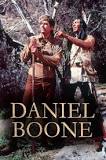
The 1960s T.V. series "Daniel Boone," starring Fess Parker, provides the viewer with a basic idea of what life was like in Boonesborough.


Be sure and come back next week for another Throwback Thursday blog post courtesy of Moore Historical Consulting. I have all your historical consulting, heritage management, and preservation needs covered. Put me to work for you!!

Thursday, April 27, 2017

Battle of King's Mountain


The Battle of King's Mountain was fought on October 7, 1780 in present day Cherokee, South Carolina. The battle was part of the Southern Campaign of the Revolutionary War. The British Army had been in the Southern Colonies for many days, leading up to the battle. The Patriots, however, marched to Sycamore Shoals, in present day Elizabethton, Tennessee, where they mustered. Benjamin Cleveland and William Campbell were the leaders of the militia. They were joined by Campbell's cousin, Arthur, and his "Overmountain Men." The Patriots thought they could surprise the British, but two deserters found the British commander, Patrick Ferguson, and let him know what was happening. The Patriots wanted to get to King's Mountain first, so that they would have the strategic advantage of being in an elevated position. As a result of the deserters filling the British in on their plans, the British were first in getting to King's Mountain. They made their camp on the highest point, known as King's Pinnacle. The Patriots, thinking that they could get there first, marched all night. Once they got there, they found the British had already arrived. They decided to surround the ridge, therefore trapping the enemy on the mountain. The numbers for each army were fairly even. The Patriots had 900, where the British had 1,100. The British had no idea that the Patriots had caught up to them. Cleveland and Campbell divided their men into eight detachments of 100-200 each. Just after three o' clock in the afternoon, they charged up the mountain. No single man in the Continental Army was ever in command. The goal was simply to assault the British. British accounts state that the "men did not know that anyone was near, until the first shots were fired." By the time the British knew what was happening, it was too late. The Patriots were able to use trees, bushes, and rocks to their advantage. As a result the British had a hard time taking effective shots. After approximately an hour of fighting, the British casualties were so high, that they were forced to surrender. Among the casualties were British commander Patrick Ferguson. There were some Patriots that refused to accept the British's surrender. They shot at the white flags, and simply shot men just because they wanted to take no prisoners. By the time all the chaos was over, the British had 290 killed, 163 wounded, and 668 taken prisoner. The Patriots only lost 28, with 60 wounded. The Battle of King's Mountain was a very lopsided affair. Historians today firmly believe that this battle was the turning point in the American Revolution, as it led Britain's Lord Cornwallis to, throw out his plans to invade North Carolina. The following battle at Cowpens further weakened the British forces in the Southern Colonies. Without victory at King's Mountain, the American Revolution could have gone much differently.

King's Mountain Battle Map

In 1931, the United States Government created the King's Mountain National Military Park, in Blacksburg, South Carolina. The photo shows the monument at the top of King's Mountain. 


The author is proud to have a relative who fought at the Battle of King's Mountain. His name is Thomas Gribble, and he was a private in Benjamin Cleveland's regiment. He is the author's fifth great grandfather.


Come back next week for another Throwback Thursday blog post courtesy of Moore Historical Consulting. Put me to work for you!!

Monday, April 24, 2017

Moore Historical Consulting Genealogy Samples


The purpose of this blog post is to provide potential clients of Moore Historical Consulting with two examples of genealogy formats. Carver Moore, company owner, will be using a portion of his own genealogy for these samples.

Option #1:

Genealogy of Oliver Gribble (Moore's grandfather)

- Joseph Gribble- Born: 1710 York County, Pennsylvania
                             Died: 1768 York County, Pennsylvania
- Married Jane
- Children: John, Thomas, and Mary Gribble
- Burial: Mount Olivet Cemetery, Fairview Township, York County, Pennsylvania

- Thomas Gribble- Born: 1748 Lancaster County, Pennsylvania
                              Died: 1813 Mecklenburg County, North Carolina
- Married Sarah Irwin in 1768
- Children: John and Thomas Carmack Gribble
- Served in American Revolution
- Burial: unknown

- Thomas Carmack Gribble- Born: February 1776 Mecklenburg County, North Carolina
                                                  Died: August 13, 1849 Warren County, Tennessee
- Married Hannah Shanks
- Children: James W., John Carmack, Thomas, William Carrol, and Irwin Gribble
- Burial: Shiloh Cemetery, Warren County, Tennessee

- John Carmack Gribble- Born: February 8, 1806 North Carolina
                                            Died: September 17, 1894 Warren County, Tennessee
- Married Susan Lucinda Roberts, Nancy Melinda Hash
- Children: Louisa, Samuel Carmack, Caroline, Thomas, William Carroll, James Simmerol, John T.    (with Roberts), George Washington, Jackson Marion, Dallas, Amanda Angeline, Isaac Hollis, and    Dielthea Gribble (with Hash).
- Burial: Shiloh Cemetery, Warren County, Tennessee

- George Washington “Buck” Gribble- Born: October 22, 1841 Warren County, Tennessee 
                                                                   Died: October 1, 1909 Warren County, Tennessee
- Married Sarah Malissa Hankins, Martha Bounds
- Children: James Tillman, Susan Necrotia, Amanda Angeline, Mary Eldridge, Holly Barnett, Cort, Horace Claudie, Nancy Bell, John Connie (with Hankins), Gertrude, Leona, George Sutton, and William Dewey Gribble (with Bounds).
- Burial: Old Bybee Cemetery, Warren County, Tennessee

- John Connie Gribble- Born: September 17, 1871 Warren County, Tennessee
                                         Died: January 25, 1961 White County, Tennessee
- Married Cora Bell Oliver on November 9, 1902.
- Children: Clarence Dillon, C. Oliver, Willie Clara, Nancy Mae, Horace Bryan, Ruth Elise, and Mary Irene Gribble
- Burial: Saylors Cemetery, White County, Tennessee


- C. Oliver Gribble- Born: April 17, 1914 White County, Tennessee
                                  Died: September 8, 1989 White County, Tennessee
- Married Gladys Velma Mansell on October 20, 1940.
- Anna Ruth, and Tammy Gail Gribble
- Burial: Saylors Cemetery, White County, Tennessee

- Tammy Gail Gribble - Born: March 13, 1960 White County, Tennessee
                                                    Died: N/A
- Married Samuel Leach Moore on August 23, 1986.
- Children: Carver Gribble, and Olivia Ann Moore
- Burial: N/A

- Carver Gribble Moore- Born: August 22, 1992 Davidson County, Tennessee
                                           Died: N/A
- Married: N/A
- Children: N/A
- Burial: N/A

- Olivia Ann Moore- Born: July 2, 1998 Davidson County, Tennessee
                                    Died: N/A
- Married: N/A
- Children: N/A
- Burial: N/A

This is the most detailed of the genealogies that Moore Historical Consulting does. It includes, but is not limited to: birth/death dates, with location for each, marriage(s), children, and burial info. I can work with the client to tailor this format to fit your specific needs. This genealogy is great when tracing your entire family history.

Option #2:

Carver Moore to William Quarles

Carver Gribble Moore- Samuel Leach Moore- Joseph Sheridan Moore- Donald Harvey Moore- Haskel Moore- Etta Terry (Moore’s wife)- Mary Pointer (Terry’s mother)- Ann Hawes Quarles (Pointer’s mother)- William Hawes Quarles (Quarles’ father)- William Quarles (Quarles’ father)

This option is not very detailed, but is great for use when trying to prove your relation to a specific ancestor, or when preparing for a family reunion. If you are writing a book, or short essay on your families' history, this genealogy can be placed into the text, or at the end, allowing the narrative to flow better.

Both of these genealogies can be tailored to fit the client's needs. Moore Historical Consulting is proud to offer these two options to clients. Contact me today at moorehistoricalconsulting@gmail.com to get started. 

Stay tuned Thursday for the latest installment of Moore Historical Consulting's Throwback Thursday series.


Thursday, April 20, 2017

Edward Ward Carmack


Edward Ward Carmack was one of Tennessee's most famous newspaper editors. He also made a name for himself in politics. Carmack figures prominently into the Restoration Movement, due to the fact that he was the son of gospel preacher F.M. Carmack. He began his practice of law in Columbia, Tennessee in 1878. He served as the city attorney as well. In 1884 he was elected to the Tennessee House of Representatives. He entered journalism shortly after, when he started The Columbia Herald.  He later went to Nashville and started The Nashville Democrat. When the Nashville Democrat merged with the Nashville American, Carmack became editor in chief. In 1892, he left Nashville and went to Memphis and became the editor of the Memphis Commercial, now known as The Commercial Appeal. In 1897 Carmack reentered politics. He was elected to the United States House of Representatives, where he served two terms. Following his second term, he entered the 1908 race for governor. The race was very heated, but he lost to Malcolm R. Patterson. Following his unsuccessful run for governor, Carmack reentered journalism. He became the editor of The Tennessean. Carmack was very outspoken on the issue of temperance. He was also unafraid of attacking rivals in the newspapers. Carmack remained a strong member of the church of Christ. He was close allies with The Gospel Advocate's David Lipscomb. Lipscomb was against members of the church of Christ being involved in politics. He also did not believe members should go to war. These views no doubt led to some interesting debates between the two men. On November 9, 1908, Carmack's newspaper attacks finally caught up with him. After a short feud, that had begun with attacks in the newspaper, Carmack was shot dead in the streets of Nashville by Duncan Brown Cooper. One of the most controversial figures in Tennessee politics, journalism, and the Restoration Movement was no more. The murder of Carmack only added more fuel to the fire of what David Lipscomb preached. In 1927, Carmack was honored with a statue in front of the Tennessee State Capital that overlooks the Capital Mall. Edward Ward Carmack is truly one of the most interesting characters in Tennessee History.

David Lipscomb

Duncan Brown Cooper

Statue of Edward Ward Carmack on the grounds of the Tennessee State Capital.

Edward Ward Carmack is entombed in the Rose Hill Cemetery in Columbia, Tennessee.


Come back next week for another Throwback Thursday blog post, brought to you by Moore Historical Consulting. Put me to work for you today!!