Saturday, January 31, 2015

The Constitution of the United States


The Constitution of the United States was written on September 17, 1787. It was ratified on June 21, 1788. The need for a new Constitution came following the American Revolution. A group of men who referred to themselves as the Nationalists felt that they needed to create a better more stronger government. They wanted a government that would measure up with that of foreign powers, and also one that would have less democracy. They felt that the Articles of Confederation and the Confederation Government were not strong enough. The first meeting among these state delegates occurred at Mount Vernon in May 1785. Only delegates from Virginia and Maryland attended the meeting. The issue was over passage along the Potomac River. The meeting was largely informal and they were able to accomplish what they needed to. The meeting did however turn to more important and larger issues. They shared these issues with the Confederation Congress, but nothing was ever done. The next meeting came in September 1786 when the delegates met at Annapolis, Maryland. Only 5 of the 13 states sent delegates to this meeting. At this meeting they discussed the problems with the Articles of Confederation and they drafted and send out a letter calling for more states to join in on this movement. The next meeting lasted from May to September 1787 in Philadelphia. More delegates showed up this time, but Rhode Island chose to hold out. By holding out Rhode Island made this meeting illegal. If caught these men could be arrested, tried, and hanged for treason. The most outspoken of these delegates was James Madison. Madison and his men from Virginia began to come up with ideas before the other delegates arrived. One of the biggest things he wanted was for the bigger states to have more votes then the smaller ones. This was never put into place. This delegation was made up of men such as George Washington, Ben Franklin, Alexander Hamilton, and a host of other big names. Washington was elected president of the convention by a unanimous vote. They thought that if Washington endorsed this new document then the citizens would as well. This proved to be very true. In the end these men were able to create a sound document that the citizens, for the most part, embraced. Since the Constitution was put into place in 1789, it has been amended 27 times. The efforts of these men have given us a strong, sound government that will last for a lifetime.

Above is a picture of the United States Constitution.

Above is a picture of George Washington.

Above is a picture of Ben Franklin.

Above is a picture of Alexander Hamilton.

Above is a picture of James Madison.


Stay tuned for more blog posts about tales from Tennessee and beyond.

Tuesday, January 13, 2015

The Scopes Trial


The Scopes Trial took place in July 1925 in Dayton, Tennessee. The issue was over the teaching of evolution in public schools. The issue arose when John Scopes, a substitute teacher, taught that man evolved over a period of time. This teaching however was against the law under Tennessee's Butler Act. This started one of the most high profile court cases that the state of Tennessee has ever seen. Scopes did not have very much support in Dayton. The citizens felt that he was brainwashing their children. Scopes enlisted the help of Clarence Darrow to be his defense attorney. Darrow was one of the nations brightest defense attorneys. The state of Tennessee enlisted the help of prosecutor, and former presidential candidate William Jennings Bryan. Bryan had been very outspoken against teaching evolution in public schools. The case drug on from July 10th to July 25th. Media from all over the country descended upon Dayton. The once quiet carefree town was now at the center of a major legal battle. According to some accounts Darrow was actually wanting Scopes to be convicted so that he could appeal to the Supreme Court to have the Butler Act ruled unconstitutional. Darrow even went as far as calling Bryan to the stand as a witness. Bryan testified on behalf of the Bible. Darrow tried to get him to admit that the Bible was not scientific, but Bryan never did. He actually strengthened his argument in favor of Creationism. In the end the jury, that was made up of many local citizens, ruled in favor of Bryan and the prosecution. They said that Scopes had deliberately violated the Butler Act by teaching evolution in a public school. This case was most defiantly a victory for supporters of Creationism. The Scopes trial's lasting effects are still being felt today. We as a nation are in the midst of a debate over Creationism and Evolution. Proponents of science are wanting evolution taught in the schools and proponents of Christianity are wanting Creationism to be taught. It is a debate that seems to have no end in sight. The one neat thing though about this ongoing issue is that it got its start in Tennessee. It put Tennessee on the map in both a positive way and a negative way. The positive way being that the citizens of that time were not afraid to stand up for Christianity and the values they believed in. The negative way however was that Tennessee was labeled as being against science to an extent. The Scopes trial is one of the more unique parts of Tennessee history, that everyone has an opinion on. I'll let you all be the judge!!

Above is a picture of William Jennings Bryan.

Above is a picture of Clarence Darrow.

Above is a picture of John Scopes.


Stay tuned for more blog posts about tales from Tennessee and beyond.

Thursday, January 8, 2015

The Battle of King's Mountain


The Battle of King's Mountain was one of the most decisive victories for the Patriots in the south during the American Revolution. It took place on October 7, 1890. Charles Cornwallis felt as though there was much ground to cover in the south so he split his army up. He put Patrick Ferguson in command of this new regiment. Ferguson's goal was to cross the Appalachian Mountains and move into what is now Tennessee. Ferguson used many irregular/guerrilla tactics in his fighting. He issued a challenge to John Sevier and his Overmountain Boys. Sevier accepted the challenge. Ferguson felt that he could easily beat Sevier using his irregular tactics. The problem was that Sevier was more familiar with the area. The two sides first encountered each other at Musgrove's Mill where they engaged in a short period of fighting. From there they moved to Sycamore Shoals, where more fighting took place. The Loyalists were defeated in both skirmishes. They were forced to retreat all the way to South Carolina. They took refuge on top of King's Mountain. Historians question this move because the Patriots were able to surround the base of the mountain, trapping the Loyalists on top. The Patriots stormed up the mountain taking the Loyalists by surprise. Fighting started out using muskets, but soon turned hand to hand. After about an hour of fighting the battle ended. The Loyalists suffered numerous casualties, including Ferguson. John Sevier gained much respect as a result of the battle, eventually leading to his election as the first governor of Tennessee. The Loyalists were forced to withdraw from the south and try to win a key battle in the north, eventually setting up the surrender at Yorktown. The Battle of King's Mountain was key in our beloved nation gaining its independence.

Above is a picture of John Sevier.

Above is a picture of Patrick Ferguson.

King's Mountain Military Park has become a site for tourists to visit. This monument is dedicated to the many men who lost their lives fighting in this battle.


Stay tuned for more blog posts about tales from Tennessee and beyond.

Friday, January 2, 2015

The Battle of Yorktown


The Battle of Yorktown, also known as the Siege of Yorktown was the final engagement between the Americans and the British during the Revolutionary War. There was really no fighting, it was basically an event to see who could last longer then the other. Charles Cornwallis who was the commander of the British army had not had much success in the Southern part of the colonies. He realized that if he was going to put the final dagger into the colonists he would have to move back to the north. His target was Yorktown. Yorktown was significant because it was near the Atlantic Ocean. Cornwallis and the British knew that they could be resupplied easily by their navy. Around this same time the French had arrived in the colonies to assist George Washington and the Colonial army. The French had heard that the British were planning to take Yorktown and set up a camp there. Washington was wanting to take New York, but he was easily convinced by the French to head to Yorktown. Cornwallis had already arrived at Yorktown and set up camp. The weather was cold and snowy and after a while the British began to run low on supplies. Cornwallis had to send to England for supply ships. Unbeknownst to Cornwallis, the French navy was on their way to Yorktown to meet up with the Colonial army. By the time the supply ships arrived at Yorktown, the French had surrounded the port. They engaged in a minor skirmish that only lasted a few hours. The British ships were forced to turn around, and the British army was trapped. Cornwallis realized that he was a lame duck. He had the French navy on one side of him, and he had the French and Colonial army on the other. Cornwallis had no other choice but to surrender his army to Washington. The Revolutionary War was over.

Above is a picture of George Washington.

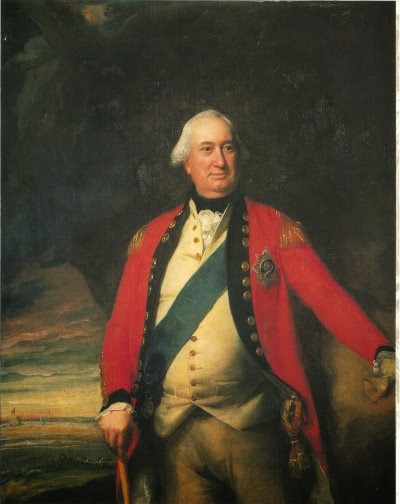
Above is a picture of Charles Cornwallis.


Stay tuned for more blog posts about tales from Tennessee and beyond.

Saturday, December 27, 2014

The Battle of Nashville


The Battle of Nashville occurred over the course of two days from December 15-16, 1864. It was part of the Franklin-Nashville Campaign. The commanders were John Bell Hood for the Confederates and George Thomas for the Union. After his disastrous defeat at Franklin, Hood was forced to retreat to the North to Nashville. Hood and his army were battered thanks to the losses at Franklin and in Georgia in the Atlanta Campaign. When Hood got to Nashville, he met Thomas. Thomas had been in Nashville for quite sometime and was joined by John Schofield, who had also fought at Franklin. Nathan Bedford Forrest who had been with Hood at Franklin was also at Nashville. Nashville at this time was controlled by the Union. The city had fallen early on during the war and the Confederates felt as though they needed to get it back in order to win the war. Some historians consider Nashville to be the gateway to the Confederacy, and if the Confederates were unable to get it back the the heart of the Confederacy would be vulnerable.  Thomas knew that he had to attack quick in order to prevent the Confederates from maneuvering. Even though Hood and his army were battered they could still maneuver very effectively. Both armies were slowed when a snow storm hit Nashville on December 8th. Fighting at Nashville happened on both land and water. The Confederates set up batteries at Bell's Bend which was along the Cumberland River. The Union forces were able to bring their ironclads up the river and attack the Confederates there at Bell's Bend. This Confederate battery was quickly driven off. The Confederates also set up position at the Nashville-Chattanooga Railroad. Just like at Bell's Bend, the Union army was able to drive their enemy off. Things were certainly looking up for the Union. Things however would change somewhat on December 16th. The Confederate forces set up a position at Shy's Hill. It was a very strong position, and was further strengthened when stone walls were built to protect them. The hill was also very steep, not allowing much movement for either army. The Union army wanted to attack but they never received orders too. One Union regiment however was able to get up the mountain and launch an attack. They were able to hit the Confederates while they were distracted. As a result of this attack Hood and his men were forced to retreat south. They retreated all the way to Granny White and Franklin Pike, and the Union forces pursued them. Hood and his army were able to cross the Tennessee River on a pontoon bridge train. The Union lost them because their pontoon bridge train had been misdirected. Hood and his men had reached safety, but Nashville was lost. The Battle of Nashville was a severe blow to the Confederates chances of winning the war.

Above is a picture of General John Bell Hood.

Above is a picture of General George Thomas.

The picture above illustrates how the Union forces were able to use their ironclad warships to assault the Confederate batteries at Bell's Bend along the Cumberland River.

Fort Negley was contructed by the Union army, but was never used during the Battle of Nashville. It is thought to be the largest stone fort during the Civil War. From this fort you can see the city of Nashville. There are efforts being made to rebuild the fort to its former glory.

Most of the battlefield has been taken over thanks to the growth of the city. Shy's Hill has become the most prominent site for tourists to visit. 

Link to the Civil War Trust information about the Battle of Nashville: http://www.civilwar.org/battlefields/nashville.html

Stay tuned for more blog posts about tales from Tennessee and beyond.

Tuesday, December 16, 2014

The French Terror


This is another research paper that I wrote this past semester (Fall 2014). I hope you all enjoy.


     The French Terror or French Revolution as it is best known was a conflict between the aristocrats and the bourgeois. The French Terror saw the rise of men such as Louis XVI, and Maximillian Robespierre. This paper will focus specifically on Robespierre and the role that he played during the French Terror. This paper will look at the social, political and economic effects that Robespierre’s actions had, and will also provide some background information about the Terror, and what various historians think about the Terror.
     Maximillian Robespierre was the leader of the Committee of Public Safety. This group was created at the end of the French Revolution. Their goal was to defend France, and expose anyone who was an enemy to the Revolution. This was carried out through an internal war. The leaders of the Terror also adopted what was known as the Law of Suspects. Under this law ones right of defense was taken away. If one was believed to have been enemy to the Revolution, then they were automatically found guilty.
     Some of the social effects that the Terror had on the French people included getting rid of secular holidays, as well as the implementation of a new calendar that was fully based on nature, and included a ten hour clock, a metric system was also put in place. These new ideas were embraced by some groups, but rejected by others. The metric system was embraced by most groups, but on the other hand the ten hour clock was not. The French Terror was already having a profound effect on French society.
     Robespierre was much like a dictator. He wanted to obtain complete control over the French government. To many French citizens he had already become the head of the ruling faction in France. Robespierre saw the people of France as unequal. He, like other dictators such as Adolf Hitler or Joseph Stalin, terrorized those that he did not like, and gave spared those that had the same views as him. The Terror was Maximillian Robespierre’s way of carrying out this idea.
     The Terror was much like a mini war. It was a war that was being fought against men and women who were believed to have been enemies of the French Revolution. In a way The Terror was much like guerrilla warfare during the American Revolution, and American Civil War. This is the case because not only were these enemies of the Revolution tortured and killed, but so were their families and property. The leaders of The Terror wanted to make a statement. That statement was to scare people enough so that they would conform to their beliefs.One of the goals that Robespierre had for The Terror was to completely overhaul society. France had been a Christian society up until the time Robespierre came to power. When Robespierre took over France he got rid of many of the Christian symbols. He was very fascinated by religion and wanted to make society purely Deist. He outlined his plan in the document entitled “The Cult of the Supreme Being.” He wanted to make religion a cult. This cult was to be embraced by the French citizens. In this document Robespierre says that it is the Supreme Being that is causing him and his followers to go after the evil ones. The evil ones were referring to the enemies of the Revolution. Many of these ideas that Robespierre comes up with were adopted by the French government, and used for years to come.[1] This document further supports the argument that The Terror had many social effects on France and her citizens.
     Maximillian Robespierre was also an advocate of political morality. In February 1794, he wrote the document entitled “On the Principles of Political Morality.” In this document Robespierre tells the French people how he is going to protect freedom. He believes that other nations will look to France as a model for how to build their own government. Robespierre says
that he wants to have a government that is similar to Caesar’s, and Cromwell’s.[1] This document helps to show students of French history that The Terror was having many political effects on France.
     The Terror affected all of France. The area that was affected the most, and was the most rebellious was the Vendee. The Vendee was unique because of the way that these people were persecuted. If one was found to be suspected of being an enemy to the Revolution, then they, under the Law of Suspects were stripped of their right to defense. In the Vendee the accused were put into boats and the boats were then sunk. If a person was able to escape, then they were hacked, using a knife, when they reached shore. The Vendee alone accounted for four thousand casualties during The Terror. This made the Vendee the most rebellious and most deadly area during The Terror.
     A few years prior to The Terror, the French Government had issued the document entitled “The Declaration of the Rights of Man and Citizen.” This document outlined the rights that men living in France felt that they had. Many people living in France at this time felt that The French Terror was basically these men carrying out the ideas that were in “The Declaration of the Rights of Man and Citizen.” They felt that these men were carrying out their rights as citizens to protect the nation.
     Robespierre had many men who were his allies. He thought that many of these men were destined to hold a very prestigious office within the French government. He actually made a list of the ten men that he thought would be able to hold a high office in France one day. This list was basically a condensed version of the list that he had made of one hundred and sixteen patriots who he felt would be able to deal with the increased patronage that came as a result of the fall of the Herbertists.[1] This goes to show historians and history students alike that Robespierre had a strong group of allies that supported him, as well as his political and social ideas. Robespierre thought very highly of these people and was committed to putting them in a position of power within the French government.
Maximillian Robespierre, throughout The Terror, preached values of honesty, and morality as a basis for his government. This was especially ironic since Robespierre and his men were responsible for the death of so many people. Many historians believe that Robespierre preached these things because he wanted to overcome the persecution that he and his followers had faced at the hands of the French high society. This was embraced by the French citizens. At the end of the speeches where these ideas of morality and honesty were mentioned, the crowd that was listening would give a rousing applause. These French citizens embraced these ideas. Robespierre felt that by changing the values of France, he could make people happy, and there would be no more, or less conflict.[1]
     Maximillian Robespierre was a supporter of a two party system. He felt that by having a two party system, both parties could correlate with each other. Many French citizens viewed Robespierre as a party chief. He did not like this view, and found it very shocking. He wanted to be viewed as more than just that. He wanted to be viewed as the head of France.[2]
     Opponents of Robespierre and the Committee of Public Safety viewed them as “drinkers of blood.” They felt like all they did was execute those whom they did not agree with. They had the

view that Robespierre had sent everyone in France to the guillotine. They realized that something needed to be done. They had to rise up and overthrow the Committee of Public Safety.
     The enemies of The Terror were known as the National Convention. The first step they took was to remove all the fanatical priests from France. Their goal was to get them out of France and deport them to colonies in Africa. They thought that by doing this it would give them back control of the religious sector in France.[1]
     The National Convention was successful in removing these fanatical priests from France.  Robespierre responded to this by issuing a decree demanding that these priests be returned to France at once. The decree proved to be ineffective, as the priests were not returned to France. This further strengthened the animosity between the Committee of Public Safety and the National Convention.[2]
     The removal of the priests that Robespierre had put in place was the beginning of the end for the Committee of Public Safety. The National Convention was picking up steam and gaining much support within France. Not only were the opponents of Robespierre supporting the National Convention, but people who once supported Robespierre were now turning their backs on him. The Committee of Public Safety was becoming more and more like a lame duck government. This would lead to problems for Robespierre in the future.
     The National Assembly felt that it was their duty to warn French citizens of the danger of Robespierre and the Committee of Public Safety. They passed out anti-Robespierre pamphlets, and they also put ads in the newspaper. These things helped to convince people to turn away from the Committee of Public Safety. This further strengthened the idea that Robespierre and his government were nothing but lame ducks.
     Quite possibly the most outspoken critic of the Committee of Public Safety and Robespierre was Bernard de Saintes. He was a well-respected member of French society. He was also one of the leaders of the Jacobin movement. He demanded a document be printed that denounced all the former members of the Committee of Public Safety. [1]
     In July of 1794, Maximillian Robespierre and some of his close associates were overthrown and then executed by using the guillotine. This was known as the Thermidorean Reaction. This reaction was all about taking back the French government from the dictators like Robespierre. The reaction was led by men from the Upper classes of society in France. They had finally succeeded in getting their country back.[1]
     After the fall of Robespierre and his Committee of Public Safety, France was sort of left in limbo politically. They really did not know what they were going to do next. The Terror had taken such a toll on France and her people both politically and socially that they were extremely lucky to have been able to recover. The government and political system of France was in shambles. Many of the men that were qualified to lead the government had been followers of Robespierre and could not be trusted. The question now for France was where should they turn?
     The remaining supporters of the Terror still made one more attempt to rise back up and take control of the government. They did this by sending the Sans-Culottes out to attack the National Convention which was located in the Prairial Coup in France. This uprising by the Sans-Culottes
was quickly put down by the French National Guard, and also by the Gilded Youth.[1] The threat was officially over.
     The Terror affected the French economy in the sense that Robespierre and his cronies had destroyed everything. France was essentially in ruins, and the little money that the aristocrats and bourgeois had was worthless. The 1790s was a period of depression for the French people.[2] It took many French people this decade and more to fully recover economically from the Terror. People who had been filthy rich before the Terror began were now impoverished. It would take the French people years to recover economically from this terrible event in French history.
     The French economy’s recovery was set in motion thanks to the development of a new paper currency. This currency was modeled after the currency that was being used in England and the United States during this time. This currency helped to make up for the shortage of cash and helped to pull the French economy out of its recession, that it had been in thanks to the Terror. [3]
     The Terror affected both the Aristocrats and the Bourgeois classes. The Terror and Committee of Public Safety terrorized both of these groups in various ways. These groups had their homes, farms, businesses, and many other things destroyed during the Terror. Historians believe that the group most affected by the Terror was bourgeois merchants as well as manufacturers. The loss of raw material had hurt both groups, but especially the manufacturers.[1] These manufacturers had nothing to make their products with. These people were affected in the sense that the economic destruction that had taken place during the Terror had hurt and sometimes killed their businesses or production lines, and had plunged France into a recession.[2]
     Historians have many theories as to why the Terror happened. Francois Furet in his book Revolutionary France argued that the Terror occurred because of the dialectic between the Revolution’s demand for unity and its belief that there was a conspiracy among the aristocracy. He also said that there divisions among the pro-Revolutionists. These divisions were most likely created by the spread of lies.[1]
     Historian Simon Schama said that violence was the goal of the Terror all along. The Terror, according to Schama was nothing more than a blood bath. The goal was to see how many people they could send through the guillotine. Schama’s argument is perhaps the simplest explanation of what happened during this period. His argument is widely accepted among French Revolution historians. [2]
     These arguments are just a few of the many theories that historians have about why the Terror occurred. The common theme, as one should be able to see, is that every person who has ever studied the Terror believes that it was all about killing. Some historians believe that it was nothing more than a knee-jerk reaction by the French citizens, to solve a serious situation as quick as they possibly could.[3] In other words they rushed into it and paid a price for doing so.

     Furet echoed these same sentiments about the Terror. He said that it was nothing more than an exceptional reaction to an exceptional emergency.[1] In other words Furet echoed what was discussed in the above paragraph. Robespierre and his cronies basically got too much power and overreacted and went out and terrorized thousands of people who they suspected had done something wrong. He had no concrete evidence that these people had done something wrong; they just did not have the same views that he did. This is a prime example of overreacting and seeing it backfire in one’s face.
 There are really no beneficiaries of the Terror. Everyone in France was affected in one way or another regardless of their social standing. The Terror and its leaders took no prisoners; they were out to change everything and everybody. Historians have debated as to who these beneficiaries could have been. The French army comes up as a likely candidate. The argument that is used to support this idea is that army men who survived the Terror were honored upon the conclusion of this event for their service.[1] Robespierre and his men could also be thought of as a beneficiary of the Terror, but they were either executed or thrown in prison after the war was over. They benefited more during the Terror then they did after it.
     The Terror is one of the most famous as well as deadly events in French history. It was all the things mentioned in the previous paragraphs and more. It was indeed a knee-jerk reaction by a group of people in French society, which ended up affecting every French citizen. These people were affected socially, politically, and economically. The actions of The Committee of Public Safety under the leadership of Maximillian Robespierre were as heinous as one can be. The Terror under Robespierre’s leadership led to the death and torture of many French citizens young and old, male and female, and children. This was truly a time of great bloodshed and evil doing within the country of France. Robespierre wanted to be the head of the government and it led to serious repercussions down the road for France and her citizens. The Terror was truly a terrifying time for France.

Above is a picture of Maximillian Robespierre.

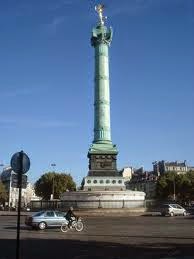
There have been many monuments erected to honor those who lost their lives during the French Terror and French Revolution. The one above commemorates Bastille Day which is much like our July 4th.

The book above entitled The Unseen Terror by Richard Ballard is a good book for anyone who wants to learn more about the French Terror. I highly recommend it.


I am sorry for the way this post is formatted. Like the previous one this one was copied and pasted from Microsoft Word, and came out weird.


Stay tuned for more blog posts about tales from Tennessee and beyond.


Friday, December 12, 2014

The Life and Legend of Francis Marion


Sorry for the delay between posts. School has been keeping me busy. Hope you all enjoy this new post. It was a research paper I wrote this past semester (Fall 2014).


Francis Marion is considered by many historians to be the father of guerrilla warfare. His tactics and methods inspired men such as John Singleton Mosby to follow in his footsteps. Marion’s greatest enemy was the British who were occupying South Carolina. Marion, due to his efforts during the American Revolution, became a hero of sorts at the war’s end. This paper will focus on Francis Marion’s motivations to fight in the American Revolution, and will also focus on some of the various tactics that he used.
     Francis Marion was the son of a South Carolina plantation owner. He spent most of his childhood working on the plantation. At the age of six Marion was sent to get a formal education. Many historians believe that Francis’ education was nothing more than basic subjects.[i] A young Francis was fascinated by ships and sailing from a very young age. At age fifteen he embarked on a voyage to the West Indies. The journey was fairly uneventful until the crew headed home. While on the way home the ship sprung a leak and began to take on water. The men were forced to abandon the ship in favor of a small rowboat. The men were in this small boat for seven days. They had no food or water, and two of the men died. The men, inorder to quench their thirst, killed a dog that was on the boat with them and drank its blood.[i] Needless to say this near death experience gave Francis a new outlook on the sea.
     After his near death experience at sea Francis Marion decided to go back to working on the plantation. Marion stayed loyal to the farm even though his siblings were getting married and leaving. This proved to be a good decision, as Francis’ father passed away in 1750. Francis was now left with his mother and the plantation to tend to.[ii]
     When Francis Marion was twenty-five years old he began his military career. Little did he know that by joining the military, his name would become synonymous with early colonial history. At the time of his enlistment the French and Indian War was taking place. The war was taking place primarily on the Western Frontier. Francis did not see much action until he encountered a Cherokee ambush near the Indian town of Echoe. Marion was able to drive the Cherokees back, and then retreated all the way back to Fort Prince George. While retreating Marion was able to fend off two minor attacks.[iii]
     Throughout the remainder of the French and Indian War, Francis Marion was able to prove to his superiors that he was indeed a very capable military leader. Francis and his men were responsible for clearing the way for Lieutenant Colonel James Grant to go through and clear out and scatter the Cherokee Indians. After his band was discharged, Marion returned to the plantation. He had gained much respect and fame during the war. He had served alongside men who became very prominent members of South Carolina government.[iv] These men had taken notice of Marion’s conduct during the war, and would call on him later on down the line.
     Francis Marion did not participate much if at all in the Colonial resistance against the British Parliament. Historians have found evidence that Marion may have participated some at the local level. Evidence suggests that Francis and his brother Job were elected to
to South Carolina’s first Provincial Congress.[i] This is really the only evidence that historians have found that Francis Marion was involved in protesting against the British. Marion would do most of his protesting through his guerrilla warfare tactics.
     The South Carolina Congress divided up men into different companies and regiments at the beginning of the war. Marion was given command of his own company of troops. The catch to this was that he had to go out to the territories along the Santee, Black, and Peedee rivers and recruit men to join his company. He was able to do this relatively easy. By the time he had finished recruiting he had signed around sixty men.[ii] All of these men were eager for the chance to fight for their independence.
Francis Marion was not only responsible for recruiting these men, but he also had to train them. The training began as soon as the men got back to Charleston. Much is not known about the training that these men went through, but it was most likely fairly similar to the training that goes on in the military today. By September of 1775, Marion felt that these men were ready to go to war.[i]
     The first action that these men saw was at the Battle of Fort Johnson and Moultrie. Marion was put in charge of building up the defenses at Fort Johnson. He saw this task as a way to serve his country. After leaving Fort Johnson, he traveled down to meet Colonel William Moultrie. Moultrie was in the process of building a fort, which bore his name. The men in charge of building it were members of the Continental army. The fort remained unfinished when the British made their attack on it.[ii]

On June 20, 1776 a British fleet of nine ships approached Fort Moultrie. The fleet was commanded by Peter Parker. The men immediately dropped anchor and attacked the fort. By the end of the battle, there were forty four British soldiers killed, and the Americans had only lost twelve.[i] This led to increased conflict between the British and the Americans.
     Over the next few years Francis Marion and his men engaged in a few minor battles. These minor battles included Gates, and Nelson’s Ferry. Marion did not start engaging in serious guerrilla tactics until 1780. From 1780 to 1782 Francis Marion embarked on three of the earliest and possibly most famous guerrilla campaigns in American history. In 1780 Marion left Moultrie’s command, and became lieutenant colonel of his own band of men.
     Marion and his army started off at Sheldon, which was near Pocotaligo. They were ordered to watch the movement of Prevost. They wanted to prevent him, and the British army from getting supplies from the Carolina side of the Savannah River. They laid low for a little while in the Carolina countryside. Marion stayed at St. Johns for a while before moving from house to house staying with different civilians. Marion was able to fly off the radar for five months.[ii]

 Francis Marion’s biggest enemy was most likely Colonel Banastre Tarleton. Their relationship was much like that of Champ Ferguson and Tinker Dave Beaty, during the Civil War. While Marion had been off the grid Tarleton and his British troops had been surprising and routing the American forces. Marion was determined to get revenge. Marion and Tarleton met at Lynch’s and Peedee Creek, where Francis was given the command of the troops.[i]

    Marion and his men did most of their fighting around Port’s Ferry. They engaged in some minor skirmishes with British forces at and around Port’s Ferry. Most of the skirmishes consisted of some minor raiding and looting by the Americans. There were really no battles that took place. [i]
Francis Marion later encountered the renowned Banastre Tarleton near Charleston. Marion and his men put their new guerrilla tactics to good use. They hid in the bushes and waited for the British to come marching through. The Americans, however, were unaware that Tarleton and his men had already passed them. Marion and his men saw lights just up the road and thought that the British were burning down a nearby plantation. Colonel Richard Richardson came and told Marion that the British were indeed nearby and they had double the number of men that the Americans had. Marion was also informed that Tarleton had a guide that was showing him the area. Marion was forced to retreat because he knew at this stage in his campaign he would be no match for Tarleton and his British army.[i]
     Quite possibly the biggest engagement that Francis Marion was involved in during the American Revolution was the Battle of Charleston. This battle meant a lot to Francis because he was defending his home. Marion was put in charge of the guns on the left flank. His job was to fire on the enemy, and when he ran low or ran out of ammunition, he was responsible for reloading the guns. This was a very dangerous job but Francis was able to carry it out and was successful at it. Charleston however proved to be a victory for the British. Marion was thought to have hurt his ankle during the battle, but was able to make a full recovery.[ii]
     The Battle of Savannah was the second major battle that Francis Marion was involved in. His role was greater than it had been during the Battle of Charleston. He was put in charge of his own regiment of men, who issued to him and Brigadier General Isaac Hunger. The battle was very bloody and the Americans lost many men. Even though it was a loss Francis gained the respect of many members of the Continental army. After the battle he was told to take his men and go out and look for deserters from the Continental Army. He and his men were successful in carrying out this mission.[i]
     Francis Marion like other guerrilla fighters throughout history used his own unique tactics. During the Civil War irregular fighters focused mainly on the enemies’ supply lines. Marion was no different. He focused primarily on the British supply lines between Charleston and Camden. Marion felt that by raiding the British supply lines he could force the commanders to move men off the battlefield, and out to guard the supply lines near the road. Marion, by doing this also was able to provide much needed supplies for his men. The practice of raiding supply lines became a common practice not only during the American Revolution, but for years to come.[i]
     Francis Marion also used a variety of weapons to carry out his irregular warfare. Most of his men carried extremely heavy sabers that were made with the saw blades from local Carolina plantations. Marion himself used a variety of different rifles. He had some that he used for close range shots, and others that he used for long range shots. The rifles and sabers came in handy when carrying out an ambush mission for the continental army. The guns were used early in the engagement and then if it got to the point of being hand to hand combat, then the sabers were used to jab the enemy. When weapons were lost or stolen Marion and his men would often take the weapons off the dead and wounded, or simply raid British supplies of new weapons. Sometimes General Marion and his men would steal weapons from loyalists when they would raid their houses.[ii]
     Marion unlike later guerrillas like William Clarke Quantrill or Champ Ferguson, conducted reconnaissance missions to help scout the enemy. This greatly increased the success that Marion and his men had on the battlefield. The men knew exactly what they were going up against and could plan their strategy accordingly. Oftentimes locals who supported Marion and what he was fighting for would give him tips on where the British army was, or where British loyalists lived.[i] The idea of using reconnaissance was adopted by John Singleton Mosby during the Civil War. This proved that Marion did indeed have a brilliant military mind.
General Marion often attacked what historians refer to as soft or weakly armed targets. These targets were obviously easier to capture. By doing this Marion did not have to worry about getting his men killed or injured. They could attack quickly and then move on to the next target. Marion like other guerrilla fighters often surprised their targets. This gave Marion and his men and advantage because the enemy that they were attacking would have little to no time to react.[i] This strategy was also adopted by John Singleton Mosby. This is how he got the nickname “Gray Ghost.”
     Francis Marion got the nickname “Swamp Fox” because he carried out most of his attacks either in swamps or in swamp-like conditions. He felt that he had an advantage by leading the enemy into disgusting terrain. Most armies do not like to fight in unpleasant conditions, and the British were no different. Another advantage of doing this was that the British army was unfamiliar with the terrain. General Marion and his fighters could lure a band of British soldiers into a swamp or a place that had swamp-like conditions, and could easily defeat them. This strategy that was employed by Marion forever made him known as the Swamp Fox.
Marion’s main goal during the American Revolution was to go out and rid the colonies of British loyalists. He was able to recruit some of his Revolutionary war co fighters. These men joined forces with Marion, and were very loyal to him. These men provided their own weapons and horses. These men joined Marion with one goal in mind, and that was to kill. These men became known as “Marion’s Men,” and from 1780 to 1782 they would terrorize all people that they knew or believed to have known to have been a British loyalist.     Colonel Banastre Tarleton as was mentioned earlier knew who Francis Marion was. His goal was to eliminate Marion and his men. Marion had first attempted to engage Tarleton in combat by hiding in the bushes along the road to Charleston. This was a failed attempt because Marion knew he would be no match for the British. Tarleton was very much a pain in the neck for the Americans. He always seemed to get the better of them. Marion soon grew tired of Tarleton and his boasting. He decided that he would track him down and beat him himself.
     Marion never had the opportunity to defeat Tarleton however. On January 17, 1781 Tarleton and his men were heavily defeated by the Americans, led by General Nathanial Greene at Cowpens in South Carolina. The news of Tarleton’s defeat spread quickly through the colonies. British loyalists were upset because they felt that they were now vulnerable to irregular bands like Marion’s Men. Many historians believe that Francis Marion did indeed play a role in defeating Tarleton. It is believed that the British had to focus on protecting their lines of communication from guerrilla bands such as Marion, and they left Tarleton vulnerable to Greene. Marion did not find out about the defeat of Tarleton at Cowpens until Greene wrote him a letter explaining to him what had happened.[i] Either way Marion’s biggest threat was defeated.[ii]
Francis Marion and his men continued to raid for the next few months, they no longer had to worry much about any British threat to their guerrilla activity. Not much is known about his activities during the spring and summer of 1781. He and his men were able to capture Fort Watson, and made a failed attempt to take Georgetown.[i] After the victory at Fort Watson, Marion wrote a letter to Nathanial Greene telling of how the battle played out, and also how many casualties there were.[ii]
     On September 5, 1781 Marion was served with orders telling him to join with Nathanial Greene at Eutaw Springs in South Carolina. Greene was planning to attack the British that were at Eutaw Springs, and he needed Marion and his men to strengthen his army. The plan was to attack the British on the right flank. The British who were commanded by Alexander Stewart had let their guard down and were unaware of the American threat. Things were shaping up for an American success at Eutaw Springs.[i]
     On September 8, 1781 at around four in the morning Greene, Marion, and Charles Lee set out from Burdwell’s Plantation to Eutaw Springs. Marion’s task was to fight on Greene’s right flank. Greene made the decision to use the same strategy that Daniel Morgan had used earlier at Cowpens. Stewart and the British still had no idea that the American’s were anywhere around them. At around eight that same morning the British finally realized that the Americans were there. By this time it was too late for the British. They had to stay and fight because if they retreated they would be cut up. Stewart’s only move was to send out men to start minor skirmishes to slow the Americans down and buy him some time. The Americans performed extremely well according to accounts. They were able to advance about half a mile and they fired very slowly but they were very accurate.[ii]
     The British were very vulnerable on the left flank and the Americans took advantage.  They attacked the flank forcing the British to retreat. The Americans destroyed everything as they pursued the British. Many local loyalists fled to Charleston, or hid in nearby ditches and ravines. The Americans were faced with a low supply of ammunition. They also knew that they had to take the water supply from Stewart. Greene’s plan was to attack the British as they marched. Greene decided to leave a band of men in the area to keep tabs on the British army’s movements.[i]
     Based on accounts, Marion’s militia fought really well. Greene praised Marion and his men in his official reports. He ordered Marion and Charles Lee to go out and try to either slow Stewart from moving to Charleston, or intercept the British supplies. Greene allowed Marion to be independent after the Battle of Eutaw Springs. He kept a close watch on Eutaw Springs and Charleston.[i]
     For the rest of 1781 Marion continued to do some minor raiding. It was not until January of 1782 that the next major event in Marion’s life took place. He was elected to a new state assembly at Jacksboro. Marion accepted his new position and left his men to take his seat. He put Peter Horry in command of his militia. Marion vowed to return, but a few of his men decided to rise up and turn him over to the British. This however is rumor, and Marion was never captured by the British. While Marion was gone Horry lost a skirmish at Wambaw. Marion finally returned and led his men to a victory at the Battle of Peedee River. Francis Marion discovered that his place was on the battlefield, not as a government official. [ii]
     In December of 1782 the British removed their garrison of Charleston, and the treaty of Paris was then signed bringing an end to the American Revolution.[i] Francis Marion retired to his plantation only to find that had been burned and his slaves and livestock were gone.[ii] He had gone from being one of the wealthiest men in South Carolina to one of the poorest.[iii] This was the British loyalist’s way of making him pay for all the things that he had done to them. Marion like so many other patriots was forced to rebuild his life from scratch. Marion later became a South Carolina senator. As a senator he managed to stay true to his beliefs and values.[iv] Marion’s personal life improved after the war as he met and fell in love with Mary Videau. Her wealth was able to assist Francis in rebuilding his plantation. For the rest of their lives Francis and Mary Marion lived lives that included a world of happiness and contentment.[v] Francis finally passed away on February 27, 1795 at his plantation, from an unknown illness that he had been battling for some time.[vi] A true American hero had fallen.
Francis Marion became the subject of many great honors after his death. Probably the most notable honor that has been bestowed upon Marion was the university in South Carolina that bears his name. Marion also has a park that was named after him. There are multiple counties in South Carolina and the United States that are known as Marion County. He has also been the subject of numerous books and film. The most notable film that Marion’s life story was featured in was an eight part Disney series that detailed his life and military exploits. As far as being the father of guerrilla warfare goes, Marion set the standard. Marion, since he was affiliated with the Continental army and took orders from them, would be considered a partisan ranger. If he had been a regular guerrilla like Champ Ferguson, then he would not have been honored very much if at all and if the Americans had lost he probably would have been executed. Francis Marion truly is an American hero who played a vital role in helping this country gain its independence.

Francis Marion often lured his enemy into swamps and marshes throughout South Carolina. This is where he got the name Swamp Fox. The above painting illustrates this.


Francis Marion's legacy lives on as he has a university named in his honor.

The book entitled Francis Marion: The Swamp Fox by Hugh F. Rankin is one of the books that I used to assist me in writing this paper. I highly recommend it.


Sorry for the weird formatting of this paper, I copied and pasted it from a Word document and it came out weird.

Stay tuned for more blog posts about tales from Tennessee and beyond.